



Miniature Garden House: Guide, Ideas, and Kit Recommendations
If you’re looking for a miniature garden house — a small-scale greenhouse, cottage garden, or floral scene that sits on your shelf and holds light — this guide walks you through what to look for, what themes exist, and how to match a kit to your skill level and the time you actually have.
What Is a Miniature Garden House?
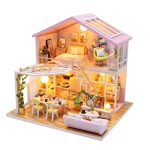
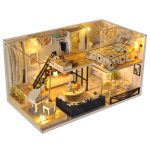
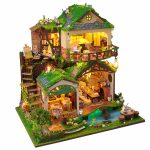
A miniature garden house is a scale-model scene built around botanical, greenhouse, or cottage garden themes. Unlike full house kits that replicate rooms and architecture, garden house miniatures focus on natural elements — potted plants, trellises, climbing vines, wooden benches, glass-pane roofs. They fit the same shelf space as a miniature house kits for adults collection, but the visual language is different: more green, more texture, more light filtering through tiny windows onto miniature terracotta.
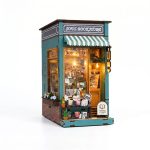
Some garden house kits are designed as Book Nooks — narrow scenes meant to slide between books on a shelf, viewed from the side to create the illusion of a passage into another world. Others are standalone dioramas with open tops or glass covers. The choice depends on where you want to display it and how much depth your shelf allows.
The category is growing fast. Two years ago, most search results for “garden house miniature” returned full-size dollhouses or outdoor fairy garden kits. Now there are kits specifically designed for indoor shelf display, with LED lighting and laser-cut wooden parts. That shift matters because the materials, instructions, and scale are fundamentally different from outdoor fairy gardens or children’s dollhouses.
Choosing Your Kit: Key Selection Criteria
Before you pick a garden house miniature kit, four factors determine whether you’ll enjoy the build or abandon it on step 47.
Footprint and Scale
Measure your shelf gap first. A Book Nook insert typically runs 6–8 inches deep and 8–10 inches tall. A standalone diorama might be 10 x 12 inches. If you’re placing it between books, the depth constraint is real — I’ve seen buyers order a beautiful kit only to find it sticks out three inches past their Hemingway collection.
Difficulty Level
Nookcraft kits come in two levels. Intermediate kits take around 4–7 hours. Advanced kits take 8–15 hours. In my experience, the declared time is usually the fastest a competent builder could go if nothing went wrong. We add 30–40% and tell buyers to plan for two sessions, not one. The second session is almost always better — the glue has set, you’re not rushing, and you can actually enjoy the later steps.
Material Quality
Look for laser-cut basswood. Basswood is light, has a fine grain, and takes paint well. The precision matters too — ±0.1mm tolerance means snap-fit joints that actually hold. Cheaper kits use MDF, which is heavier, less attractive, and tends to fray at cut edges. You’ll feel the difference in your hands at step 12 when two pieces either click together or fight you.
Included Features
Every Nookcraft kit includes an LED string with wire and battery compartment. Some budget kits charge extra for lighting or don’t include it at all. Check before you buy — that warm glow through a miniature greenhouse roof is half the reason people display these. (Battery not included. You’ll need CR2032 button cells.)
For a deeper breakdown of tools, time, and kit selection, the beginner miniature house kit guide covers everything from first purchase to finishing.
Inspiration: Miniature Garden House Themes and Ideas
The theme you choose shapes the entire build experience — not just the final look, but how engaged you feel during assembly. Here are the directions I see most often:
- Cottagecore greenhouse. Glass-pane roof, wooden staging shelves, potted herbs, and a watering can. This is the most popular garden house theme in the Book Nook category right now. The miniature greenhouse and floral kits page has examples of this style.
- Floral workshop. A flower shop or potting shed with dried flowers, seed packets, and tiny terracotta pots. More interior-focused than the greenhouse theme, with more furniture-scale detail.
- Hanging garden miniature house. A vertical scene with trailing plants, wall-mounted planters, and a window box. These work especially well as Book Nooks because the vertical format uses the height of a bookshelf rather than the depth.
- Star garden courtyard. A night-scene miniature house in a garden setting, with LED-lit pathways and small star-shaped lanterns. The lighting does most of the work here — after dark, these look like a scene from a quiet evening.
For twenty-plus scene themes across all categories — not just garden houses — the miniature design ideas page is where I’d start browsing. It’s organized by aesthetic, not by product name, so you can figure out what visual language appeals to you before narrowing down to a specific kit.
Kit Recommendations Based on Skill and Style
Here’s how I’d match a DIY miniature garden house kit to where you are right now:
| Skill Level | Piece Count | Time Estimate | What to Expect |
|---|---|---|---|
| First-time builder | Under 200 pieces | 4–6 hours | Fewer botanical details, larger individual parts, straightforward LED wiring. Good for building confidence. |
| Some experience | 300–400 pieces | 6–10 hours | More intricate plant elements, multiple rooms or zones, finer window and door assemblies. The middle ground. |
| Experienced crafter | 500+ pieces | 10–15 hours | Dense botanical detail, multi-layer lighting, miniature books and accessories. This is where garden house kits get genuinely absorbing. |
Every Nookcraft kit includes full-color English photo instructions, an LED string, and 30-day returns with free replacement parts for missing or damaged pieces. In our build tests, the most common issue isn’t a missing part — it’s a piece that gets accidentally glued in the wrong orientation at step 30 and discovered at step 58. That’s why we include spares for the most error-prone components.
Browse the full range of miniature house kits for adults to find a garden house theme that matches your shelf and your schedule.
Getting Started: Tools, Time, and Common Pitfalls
Once your garden house miniature kit arrives, here’s what you need before you open the box:
- Cyanoacrylate glue (super glue). Not included in any kit I know of. Small tubes work better than large ones — the nozzle stays precise longer.
- Craft knife or small scissors. For trimming flash from laser-cut pieces and cutting fabric or paper elements.
- Tweezers. Not optional once you hit the plant-detail steps. Your fingers are too big for a 1:24 scale watering can.
- A flat, well-lit workspace. I use a cutting mat on an ALEX desk. The mat protects the surface and gives you a grid for alignment.
Now, the pitfalls. Based on our build tests with first-time builders, the two steps that cause the most frustration are the same across nearly every garden house kit: layering roof tiles or trellis panels (which require patience and precise glue placement) and threading the LED copper wire through narrow anchor holes (which requires steady hands and reading the instruction diagram carefully, not just quickly). We let three people who had never touched a miniature kit build the same model, and all three got stuck for more than ten minutes on those exact steps. The instructions weren’t wrong — they were written for someone who already knew what the finished piece was supposed to look like. That’s a gap we keep trying to close.
Plan for realistic time. If the box says 6 hours, plan for 8. Split it across a Saturday afternoon and a Sunday morning. The overnight gap lets glue cure properly and gives you distance — you’ll spot mistakes on day two that you’d have missed at hour five.
The beginner guide has a full checklist for first-time kit buyers, including which tools to buy and which ones you already own.
Frequently Asked Questions
How long does it take to assemble a miniature garden house kit?
Intermediate kits take 4–7 hours. Advanced kits take 8–15 hours. In both cases, we recommend splitting the build across two sessions. The second session is almost always more productive — glue has cured, you understand the spatial logic, and you’re not fighting the clock.
What tools do I need to build a DIY miniature garden house?
You need cyanoacrylate glue (super glue), a craft knife or small scissors, and tweezers. Some builders also use a small file for smoothing edges. Kits do not include glue — that’s the most common thing buyers forget. Everything else is in the box.
Can I customize the design of my miniature garden house?
Yes. Most garden house kits use unpainted basswood, so you can stain or paint individual pieces before assembly. Some builders add extra details — real dried flowers, miniature books, hand-painted signs. The miniature design ideas page shows examples of customized builds across different themes. Start with the kit as designed, finish it, then decide what to modify. Customization works better when you understand how the pieces go together first.
Find the miniature garden house kit that fits your shelf and skill level — browse all miniature house kits →