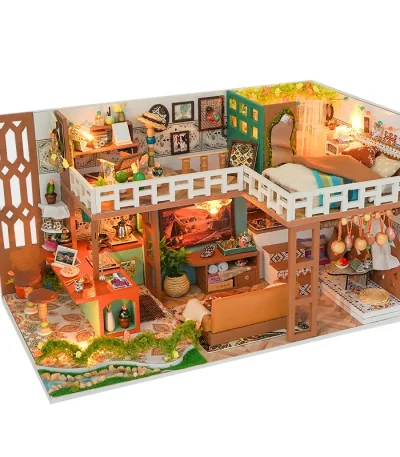
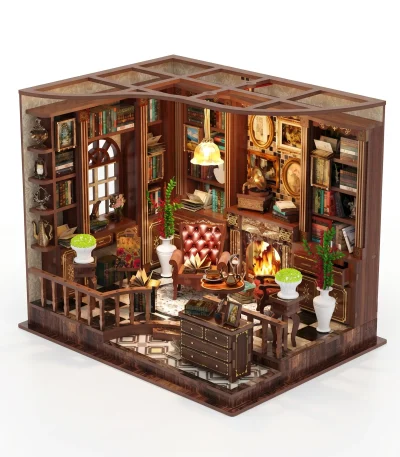
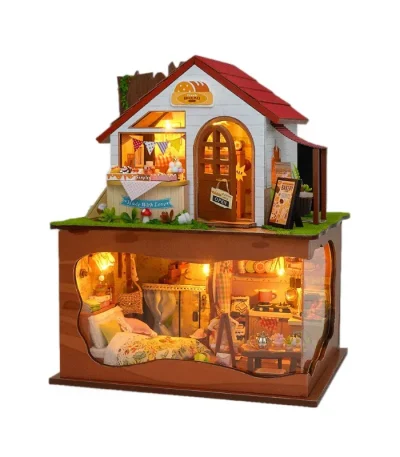
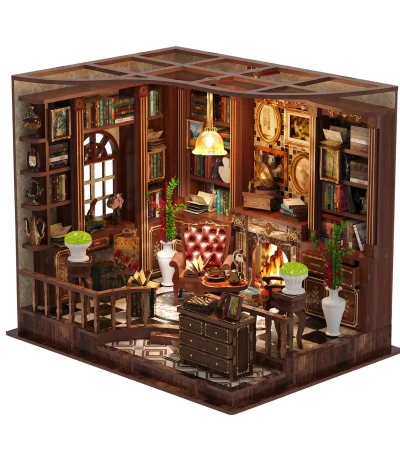
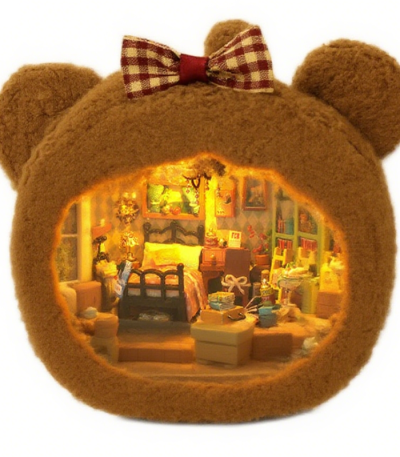
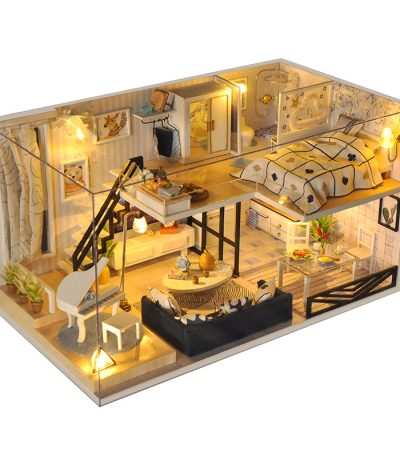
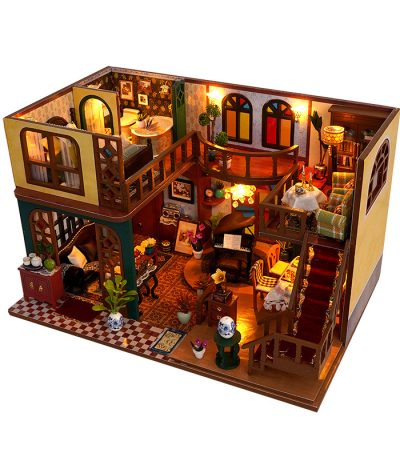
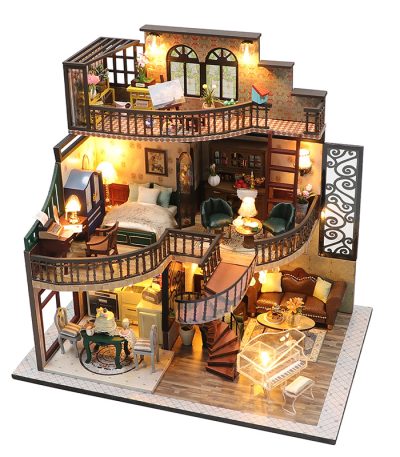
Immerse yourself in the art of interior design with our miniature room kits. Unlike a full miniature house model, a miniature room kit isolates a single, highly detailed space—whether it’s a cozy scholar’s study, a miniature house modern loft, or a vintage kitchen. Once assembled, these immersive miniature home kits serve as stunning, standalone display objects perfect for your desk or bookshelf.
Why Choose Our Interior Scene Kits:
High Detail Density: Focus on furnishing a cohesive miniature house interior with tiny resin accessories and books.
Clear Instructions: Every miniature diy house kit includes full-color English photo guides (one photo per step).
Warm Atmosphere: Built-in LED lighting brings your tiny miniature house build kit to life.
Immersive Experience: Enjoy a deeply satisfying 5–8 hour crafting session tailored for adults.
6 Styles · $27.99–$37.99 · LED Included · Perfect for Shelf Display
A miniature room kit differs from a standard miniature house kit in scope. A full house kit builds a complete exterior structure — the architecture is the subject. A room kit builds a single interior space: the walls are a backdrop, and the furniture, objects, and atmosphere are the true focus. This distinction matters for display. These miniature room kits for adults read as interior design references, sitting on a desk the way a framed print sits on a wall.
The build sequence is also unique. Because the walls are pre-set, most of the assembly time goes into furniture and accessory placement — more decisions about positioning, more time handling small details, and more iteration on the arrangement before final gluing. This makes room kits slightly more freeform at the decorative phase, and deeply satisfying for builders who enjoy the interior styling aspect of the process.
The LED illuminates the interior from inside, creating a warm ambient glow across the furniture and wall details. These setups photograph particularly well from the front at eye level — the contained space and the warm light create a depth-of-field effect that reads clearly in photos, making them highly effective for shelf styling and social sharing.
Related Guides & Collections
First Time?Beginner's Guide — Tools, difficulty levels & time expectations.
Related Category:Book Nook Kits — Interior scenes in bookshelf format (15 styles).
Inspiration:Scene Design Ideas — Interior aesthetics: Modern, Dark Academia & more.
A miniature room kit is a DIY craft kit that builds a single fully furnished interior scene by hand — a kitchen, a study, a museum archive. Unlike a full house kit that builds an exterior structure, a room kit focuses on one space: furniture, objects, atmosphere, and LED lighting, all contained within a display-ready frame. The finished piece sits on a desk or shelf as a standalone decorative object.
How is a room kit different from a house kit?
A house kit builds a complete architectural structure — the building exterior and interior together. A room kit builds a single interior space — the walls are a backdrop, and the focus is the furniture, objects, and atmosphere inside. Room kits have higher decorative detail density (more furniture, more resin accessories per square inch) and more builder discretion in the decorative placement phase. If you're drawn to the interior styling aspect of miniature kits, the room format is the better fit.
How long do miniature room kits take to build?
Room kits in this collection take 5–8 hours for most Intermediate builds. The Fossil Museum format runs slightly longer (7–10 hours) due to a higher accessory count. Build times are listed on each product page and are based on single-builder assembly at a relaxed pace. Splitting the build across two sessions — structural first, decorative second — allows glue to cure fully between phases.
What experience level do I need?
All room kits in this collection are rated Intermediate. No prior miniature craft experience is required, but patience with small parts is essential. Tweezers are mandatory — many of the accessory pieces are under 1cm. If this is your first kit, read the beginner's guide before starting: it covers glue types, tool setup, and the build sequence that prevents most common mistakes.