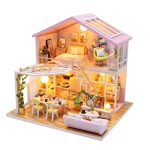
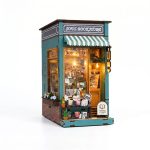
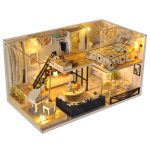
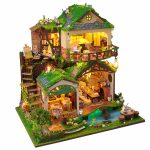
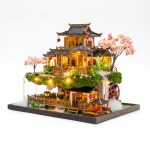



The Right Miniature Doll House Furniture Starts with These 5 Choices
Before you buy miniature doll house furniture, there is one question worth answering first: what is the piece actually for? A single chair sitting alone on a shelf looks like a stray component. The same chair inside a room scene, at the right scale, next to a table with a tiny teacup — that is a world. The difference is not the furniture itself. It is whether the furniture was chosen with a specific scene in mind.
This guide walks through the five decisions that matter most when selecting doll house miniature furniture: material, scale, theme, assembly commitment, and finishing. Each one affects how the final piece looks, how long it takes to build, and whether it fits the space you have.
Start with the Wood: Basswood vs. MDF in Miniature Furniture
The material of a miniature piece determines more than durability. It determines weight, texture, and whether the final product looks like a scaled-down object or a small block of compressed dust.
Two materials dominate the market:
- Laser-cut basswood plywood. Light in your hand. The grain is visible — faint lines running along the surface that catch afternoon light differently than the flat side. Basswood takes acrylic paint well after a light coat of sealant, and it cuts cleanly at ±0.1mm precision. That tolerance matters when two pieces need to slot together without gaps.
- MDF board (medium-density fiberboard). Heavier. The surface is uniform — no grain, no texture variation. MDF is cheaper to produce and common in budget kits. It accepts paint, but the finish tends to look flat because there is no natural variation underneath.
If you are building a scene that will sit on a bookshelf and be seen from arm’s length, the difference is noticeable. Basswood has a warmth that comes from the wood itself. MDF has a surface that needs paint to look finished. Neither is wrong — but they serve different budgets and different expectations.
One more spec worth checking: laser-cut precision. When parts are cut at ±0.1mm, joints fit tightly without forcing. If the listing does not mention cutting method or tolerance, that is a signal to ask or move on. For more on evaluating kit materials and what to expect from your first build, our beginner miniature house kit guide covers tools, materials, and what the numbers actually mean.
Scale and Fit: Does Your Furniture Match Your Scene?
A miniature chair at 1:12 scale stands about 2 inches tall. The same chair at 1:24 scale is roughly 1 inch. That is the difference between a piece that looks right in a standard dollhouse and one designed for a tighter, more compressed scene like a Book Nook insert.
Most miniature dolls house furniture on the market is made at 1:12 scale — it is the standard for dollhouse displays and the most widely available. But if you are building inside a Book Nook, the constraint is not width or height alone. It is depth. A Book Nook fits between books on a shelf, and the interior depth is usually 4 to 6 inches. A 1:12 writing desk that is 3 inches deep takes up half the scene before you add anything else.
The fix is simple but easy to skip: measure your display space first. Record the interior width, height, and depth. Then check the furniture dimensions against those numbers. If the listing does not give dimensions in inches or centimeters, that is another signal worth noting.
Mismatched scale does something specific to a scene — it breaks the illusion. A chair that is too large makes the room feel cramped and toy-like. A chair that is too small makes everything else look oversized. The goal is consistency. If you are mixing pieces from different sources, keep them in the same scale family. For a deeper look at how scene depth is designed and how to plan your layout, see our miniature house design ideas for 20-plus theme options and spatial references.
Style and Theme: Matching Furniture to Your Story
Random furniture bought one piece at a time tends to look like a collection. Themed furniture looks like a room.
The difference is not about matching wood tones (though that helps). It is about starting with a narrative. A cottage kitchen scene needs a table, a stove, maybe a shelf with jars. A writing room needs a desk, a chair, a lamp, a stack of books. A garden scene — one of the more popular options for miniature dolls house garden furniture — needs a bench, planters, maybe a trellis with climbing vines.
One approach that works: pick one anchor piece first. The piece that defines the scene. A claw-foot bathtub says bathroom. A potting bench says greenhouse. Build the rest of the furniture around that anchor — same era, same material family, same level of detail.
If you are drawn to the Cottagecore direction — wildflowers, wooden furniture, natural light — miniature greenhouse and floral kits often include furniture sets designed specifically for those themes. The pieces are already scaled and styled to work together, which removes the guesswork of matching separate purchases.
Browse the full range of miniature house kits for adults to find themed sets where the furniture, lighting, and structure are designed as a single scene.
The Assembly Commitment: Time, Tools, and Honest Difficulty
A standalone miniature chair — the kind sold as an accessory set — usually takes 30 to 60 minutes to assemble. A full furniture set for a room (table, chairs, shelf, small pieces) can take 2 to 4 hours. These are not difficult builds in terms of skill, but they are detailed. And the details are where people get stuck.
Based on our build testing with first-time builders, the two most common friction points are:
- Delicate structural pieces — chair legs, table legs, shelf brackets. These parts are small, sometimes under 1 cm wide, and the wood is thin. Applying too much force during assembly snaps them. The fix is patience and a pair of tweezers, not more glue.
- Threading and routing — if the furniture is part of a larger scene kit with LED lighting, threading copper wire through anchor holes requires steady hands and good light. In our experience, builders who attempt this in one sitting without a break tend to rush this step.
A few practical notes:
- Glue is almost never included. Most kits expect you to supply your own cyanoacrylate (super glue). Have a bottle ready before you open the kit.
- Batteries are not included either. LED strings in complete kits use button cells (CR2032) or AAA batteries, depending on the kit. Check the listing.
- Assembly time in listings is optimistic. In our experience, adding 30 to 40 percent to the declared time gives a more realistic expectation. If the box says 3 hours, plan for 4. Consider splitting the build across two sessions — the first session for structure, the second for details and finishing. The second session is almost always more enjoyable because the glue has set and you are not rushing.
For standalone furniture accessories (not part of a full kit), check the seller’s return and replacement policy before buying. In our experience with Nookcraft kits, we include free replacement parts for any missing or damaged pieces and a 30-day return window — but not all standalone furniture sellers offer the same. When in doubt, ask before ordering.
Quick Answers: Common Questions About Miniature Furniture
Does miniature doll house furniture come with LED lights?
Individual furniture pieces typically do not include lights. When furniture is part of a complete miniature house kit, the LED string included in the kit illuminates the entire scene — furniture included. The warm-white LEDs are designed to light the room from above or behind, not from inside each piece. If you are buying standalone furniture, you can add a separate LED string, but plan the wiring before you glue anything down.
What scale should I look for in miniature dolls house furniture?
Measure your display space first. For standard dollhouses, 1:12 is the most common and versatile scale — a 1:12 chair is roughly 2 inches tall, and a 1:12 table is about 3 inches. For Book Nooks, depth is the critical constraint. Most Book Nook interiors are 4 to 6 inches deep, so look at the scene photos in the listing and check that the furniture does not take up more than half the available depth. When pieces come from a single kit, scale is already handled for you.
Is basswood better than MDF for miniature furniture?
It depends on what you want. Basswood is lighter, has visible natural grain, and cuts to tighter tolerances (±0.1mm is standard for laser-cut basswood). MDF is denser, has a uniform surface with no grain, and costs less. Basswood gives a warmer, more finished look even without paint. MDF needs paint to look complete. For a natural wood finish, choose basswood. For a painted scene where texture does not matter, MDF works.
Can I paint miniature doll house furniture?
Yes. Basswood takes acrylic paint well after a light coat of wood sealant or gesso. MDF also accepts paint but tends to absorb more on the first coat — apply a primer layer first. Use a small brush (size 0 or 00) for detail work. Let each coat dry fully before adding the next. If you are working with a complete kit, paint individual pieces before assembly — it is much easier to reach all surfaces when the furniture is still in parts.
What if a piece breaks during assembly?
Small breaks on structural parts (legs, brackets) can sometimes be repaired with a drop of cyanoacrylate and 30 seconds of pressure. For pieces that snap at a joint, the repair bond is often stronger than the original wood. If the break is in a visible area and the repair is not clean, check whether the seller offers replacement parts. For Nookcraft kits, we provide free replacement parts for missing or damaged pieces within 30 days of purchase.
Where to Go from Here
Choosing miniature doll house furniture and accessories comes down to three things: the right material for your finish preference, the right scale for your display space, and a realistic plan for the time it takes to assemble. Start with those, and the rest — theme, layout, lighting — falls into place.
Ready to build a scene from the inside out? Browse miniature house kits that include all the furniture, LED lighting, and full-color English photo instructions — designed to be built across two relaxed sessions.