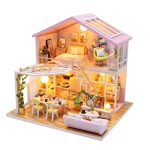
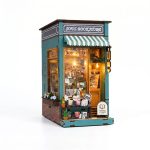
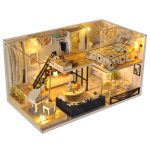
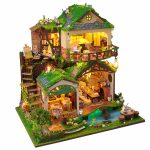




Treehouse Diorama: How to Choose, Build, and Display Your Kit
When you’re shopping for a treehouse diorama, the first question isn’t which one looks best on the shelf. It’s whether a diorama is the right format at all. Treehouse dioramas sit in a specific category — vertical, scene-based, heavy on organic shapes — and the assembly experience is different enough from a standard house kit or a book nook insert that the wrong choice will leave you frustrated by step 30.
This guide covers what defines a treehouse diorama, what to check before you buy, how to match a kit to your experience level, and what to do with it once the last piece is glued. For broader context on diorama types, see our miniature diorama kit guide.
What a Treehouse Diorama Actually Is
A diorama is a three-dimensional scene model. The emphasis is on atmosphere and environment rather than architectural structure — you’re building a world, not a building. A treehouse diorama takes that further: vertical assembly, irregular geometry (branches, canopy layers, rope ladders), and natural material textures that don’t follow the rectangular logic of a standard house kit.
Here’s how it differs from two categories it often gets confused with:
Not a book nook. Book nooks are designed to slot between books on a shelf. They’re narrow, viewed from the side, and their spatial design is constrained by the gap between your paperbacks. Treehouse dioramas are typically wider and deeper, viewed from the front or three-quarter angle, and built to stand on their own. The spatial logic is completely different — compressing depth into a shelf-sized space is its own design challenge, and dioramas don’t face it.
Not a standard house kit. House kits follow rectangular geometry — walls, floors, roof planes. Treehouse dioramas introduce curved cuts, irregular joinery (a branch connecting to a trunk at a non-right angle), and foliage elements that add complexity in ways flat wall panels don’t. If you’ve only built house kits before, expect a learning curve on the organic parts.
One boundary case worth noting: some kits blur the line. A treehouse scene sized to fit a shelf niche behaves more like a book nook in placement but more like a diorama in construction. Check the product dimensions before assuming a kit will fit between your books.
For help choosing your first miniature kit overall — tools, difficulty levels, what to expect on day one — our beginner miniature house kit guide covers the groundwork.
What to Look For in a Treehouse Diorama Kit
Five criteria matter when comparing kits. Everything else is secondary.
Piece count. 100–200 pieces indicates moderate complexity — fewer organic parts, simpler canopy. 250–400+ pieces means multi-level platforms, detailed canopy layering, and rope or twine elements. Higher count doesn’t mean better. It means more assembly time and more opportunities to misalign vertical joints.
Material. Laser-cut basswood vs. MDF board. Basswood weighs less, which matters when your finished piece sits on a shelf at height and needs to stay stable. Basswood also cuts cleaner on curved shapes like branches and leaf edges. MDF is heavier, less forgiving on curved cuts, and shows edge grain differently. Most kits in this category use basswood, but some budget options substitute MDF — check the product specs.
Assembly time — honestly. Declared times assume an experienced builder with no mistakes. Based on the kits we’ve tested, add 30–40% to whatever the box says. Treehouse kits skew longer than house kits of similar piece count because vertical joins and foliage placement require dry-fit testing before you commit with glue. We let three people who had never touched a miniature kit build the same model and tracked where they got stuck for more than ten minutes: the same two steps for all three were organic structural joinery and threading LED wire through anchor holes. The instructions weren’t wrong — they were written for someone who already knew what the finished part was supposed to look like. Plan for two sessions. The second session is almost always better: glue has set, you’re not rushing, and you can actually enjoy the later steps.
LED lighting. Most treehouse dioramas include a warm-white LED string — the glow through a leaf canopy is the primary visual payoff. Confirm what’s included: wire, switch, battery compartment. Batteries (usually CR2032 button cells) are not included in most kits. One thing we learned early: a buyer emailed to say her LED stopped working on day three. She’d followed every step. When I traced it back, glue had seeped into the copper wire joint during the final assembly push. That’s why our instructions now carry a warning at that step — keep glue away from wire ends, because contact causes intermittent failure.
Instruction quality. Full-color, step-by-step photo instructions in English. For treehouse kits specifically, look for close-up callouts on the organic joinery steps — branch-to-trunk connections, canopy-to-platform attachment. This is where most builders get stuck, and it’s where poor instructions create the most waste and frustration.
Browse miniature diorama scene kits to see current options filtered by difficulty and theme.
Treehouse Diorama Kits by Builder Experience
Match the kit to where you are, not where you want to be.
Intermediate (~4–7 hrs, ~100–200 pieces). Simpler treehouse structures — single platform, open canopy, limited vertical joins. Best if this is your first diorama build, or if you’ve done one or two house kits but never worked with non-rectangular parts. The organic geometry is the new element here; everything else — LED installation, basic glue technique — will feel familiar.
Advanced (~8–15 hrs, ~250–400+ pieces). Multi-level treehouses with enclosed rooms, detailed canopy layering, rope bridges, or connected structures. For builders who have completed at least one intermediate diorama or three or more house kits. Plan across two sessions minimum — the second session is where the piece starts to come together, and you’re no longer rushing through unfamiliar steps.
The honest self-check: have you assembled a kit with non-rectangular parts before? If the answer is no, start with intermediate even if you feel confident. Treehouse kits introduce a type of irregular geometry that rectangular house kits don’t prepare you for. There’s no downside to starting one level below where you think you are — the result is the same finished piece, with less frustration on the way there.
Budget note. Piece count drives price, but check wood type and LED inclusion separately. A 150-piece basswood kit with LEDs may cost more than a 250-piece MDF kit without. Neither choice is wrong — it depends on whether you prioritize material quality or scene complexity for your budget.
If you’re drawn to natural themes but prefer an enclosed structure, our miniature greenhouse and floral kits cover similar aesthetics in a different format.
Displaying Your Finished Treehouse Diorama
The build is half the project. Where you put it matters.
Shelf height. Treehouse dioramas are vertical structures — they draw the eye upward. Place them at eye level or slightly above. Bottom shelves waste the canopy detail because you’re looking down at the scene instead of into it.
Room lighting. The LED string inside the kit gives you warm interior glow, but the canopy casts detailed shadows on whatever surface is behind it. A slightly dim room or a shelf with a small directional light pointed at the piece amplifies the shadow pattern. I do a test after finishing any kit: leave the room, come back in one minute, see if it still looks right from the doorway. If something bothers me from across the room, I fix it before putting it on the shelf permanently.
Dust. Open canopy structures collect dust faster than enclosed house kits. Foliage elements — especially paper or fabric leaves — are difficult to clean without damaging. A dust cover or display case is worth the investment here. If you skip it, plan to blow dust off with a soft brush every few weeks.
Shelf pairing. A treehouse diorama next to a nature-themed book nook or greenhouse kit creates a cohesive shelf narrative. The depth contrast between a diorama (viewed from the front) and a book nook insert (viewed from the side) adds visual variety to a row that might otherwise read as flat.
FAQ
What’s the difference between a treehouse diorama and a treehouse book nook?
A diorama is a standalone 3D scene viewed from the front or three-quarter angle — typically wider and deeper. A book nook is designed to slot between books on a shelf with a narrower profile, viewed from the side. Some treehouse kits blur this line. Check the product dimensions before buying.
How long does a treehouse diorama realistically take to build?
Add 30–40% to the declared assembly time. Intermediate kits: plan 5–9 hours across two sessions. Advanced kits: plan 10–20 hours across two or three sessions. The second session is almost always smoother — glue has set, you know the layout, and you’re not rushing through unfamiliar steps.
What tools do I need that aren’t included in most kits?
Super glue (cyanoacrylate), small scissors or a craft knife, tweezers for placing foliage, and batteries — usually CR2032 button cells. Some kits include a small screwdriver for the battery compartment. Check the kit’s included-tools list before you start so you’re not stopping mid-build to find what you need.
Can I paint the wood pieces before assembling?
Yes. Basswood takes acrylic paint well. Paint before assembly for clean edges. Mask the joinery surfaces — mortise and tenon slots — so the glue bonds to bare wood, not to paint.</p
Is a treehouse diorama a good first miniature kit?
Not ideal if you have zero experience. The vertical assembly and organic shapes introduce complexity that flat, rectangular house kits don’t have. If you’re set on a treehouse as your first build, choose an intermediate-level kit and plan for two sessions. Otherwise, start with a standard house kit to learn basic joinery and LED installation first — then the treehouse will feel like a natural next step instead of a wall.
If this guide helped narrow your search, you can browse treehouse and nature scene diorama kits to find one that matches your shelf space and experience level.