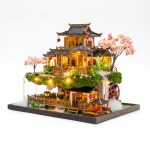



Miniature House With Garden: Your Complete Buying Guide
You’re standing in front of your bookshelf. There’s a gap between two rows — maybe eight inches, maybe ten. You’ve measured it with your hand, maybe a tape measure, and now you’re looking for the right miniature house with garden to fill it. This guide covers what to look for in a garden house miniature kit, how to match a kit to your experience level, and where to find the designs that actually work for your shelf.
What Makes a Miniature House With Garden Worth Building
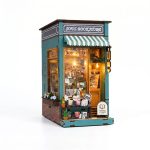
A Book Nook is a miniature scene designed to fit between books on a shelf. Viewed from the side, it creates the illusion of a world behind the bookshelf. Garden-themed kits take this further — they put a greenhouse door, a climbing vine, a stone path, or a row of terracotta pots in that narrow space. The effect is specific: not a generic room, but a place where something grows.
I build test samples at my workbench most evenings. Sometimes, after I finish, I turn off every light in the room except the LED string inside the kit. The warm-white glow hits the tiny planters, the miniature window frame, the basswood fence posts. Sitting there, watching that small garden scene light up — it’s not a dramatic feeling. It’s quieter than that. The kind of moment where you stop thinking about what you need to do next, and just exist inside the thing you made with your own hands.
That’s what a miniature house with garden gives you: a constructed pocket of stillness, sized for the space between your books. If you want to explore design themes and ideas for your miniature scene before choosing a kit, we have twenty-plus themes mapped out — from cottage greenhouses to rooftop herb gardens.
Key Selection Criteria for Garden House Miniature Kits
Before you order, four things matter: scale, material, difficulty, and assembly time. Get these right and the build goes from box to shelf without frustration.
Scale and Shelf Fit
Most kits use 1:12 or 1:24 scale. A 1:12 garden house miniature scene is roughly 7–9 inches wide and 8–10 inches tall — it fits a standard bookshelf with room to spare. A 1:24 kit is smaller, good for tight spaces or deeper shelves where you want multiple scenes side by side. Measure your gap before ordering. Leave at least half an inch on each side so the scene isn’t jammed against your books.
Materials: Basswood vs. MDF
Laser-cut basswood plywood is the standard in kits worth assembling. It’s light, fine-grained, takes paint well, and produces a warm natural finish. Our parts are laser-cut to ±0.1mm precision — that tolerance is what makes snap-fit joints work without forcing pieces together. MDF (medium-density fiberboard) is cheaper and heavier, with less visible grain. If the product description doesn’t say “basswood,” it’s probably MDF.
Difficulty Levels
We use two categories: Intermediate (~4–7 hours) and Advanced (~8–15 hours). No beginner-level kits in our current lineup — garden scenes involve layered elements like trellises, planters, and multi-piece roof structures that need some comfort with small parts. In our testing, we let three people who had never touched a miniature kit build the same model and recorded where they got stuck for more than ten minutes. It was the same two steps for all three: roof tile layering and threading the LED copper wire through the anchor holes. The instructions weren’t wrong — they were just written for someone who already knew what it was supposed to look like. That experience shaped how we write every step now.
Realistic Assembly Time
Declared assembly times on most kits are the fastest a competent builder could go if nothing went wrong. We add 30–40% and tell buyers to plan for two sessions, not one. The second session is almost always better — the glue has set, you’re not rushing, and you can actually enjoy the later steps where the garden details come together: the tiny flower pots, the fence sections, the final LED placement.
If you’re new to miniature kits, use our beginner guide to understand difficulty levels and tool needs. It covers what’s included in the box and what you’ll need to supply yourself.
Kit Recommendations Based on Your Build Style
Not every garden house miniature kit fits every builder. Here’s how to match one to your situation.
Intermediate Builders Starting With Garden Themes
If you’ve done one or two kits before — or none, but you’re patient — look for kits in the 150–250 piece range with a declared build time of 4–7 hours. Garden scenes at this level usually feature a simple structure (a potting shed, a small greenhouse) with surrounding ground elements: stepping stones, a low fence, a few planters. The complexity comes from repetition — layering fence slats, assembling multiple identical pots — not from structural difficulty.
Floral and Greenhouse-Focused Builds
For nature lovers, greenhouse and botanical garden kits are the closest the miniature world gets to a terrarium. These scenes emphasize glass panes, interior shelving, potted plants, and sometimes a tiny watering can or garden bench. They tend to have higher piece counts (250–400) because each plant and shelf bracket is its own laser-cut component. If you want to see our floral and greenhouse kits for nature-inspired scenes, that guide breaks down which ones match which skill levels.
Advanced Builders Wanting a Multi-Day Project
Some kits are designed to be a weeknight-and-weekend project — 300+ pieces, 10–15 hours, multiple sub-assemblies (the house structure, the garden fence, the interior furniture, the lighting). These are satisfying to build in three or four sessions spread across a week. The finished pieces tend to be denser and more detailed, with features like mortise-and-tenon joinery where parts interlock without glue. Browse all miniature house kits in our collection to compare piece counts and declared difficulty levels.
Design Ideas to Inspire Your Garden House Project
A garden house miniature can follow a dozen different aesthetic directions. The theme you choose determines what you’ll spend hours building — and what you’ll look at every day on your shelf.
Cottagecore Garden Shed
This is the most popular direction. A small wooden shed with a climbing vine, a stone path leading to the door, and a row of mismatched flower pots. The cottagecore aesthetic centers on rural life, natural materials, and the suggestion that someone tends this garden by hand. It works well at 1:12 scale because the details — rough wood texture, small-leaf plants — read clearly at that size.
Botanical Greenhouse
Glass-panel walls, interior potting bench, hanging ferns, a terracotta floor. This theme is more structured than the cottage garden — the geometry of the greenhouse frame gives you a visual anchor, and the interior fills in with organic shapes. It’s a good choice if you like the contrast between clean architectural lines and messy natural growth.
Urban Rooftop Garden
A different take: raised planter boxes, a wooden deck, string lights overhead, and maybe a small table with two chairs. This theme works for buyers who want something that looks like a city apartment’s outdoor space rather than a countryside scene. It reads well at smaller scales because the elements are simpler — fewer tiny leaves, more geometric shapes.
Personalizing Your Scene
Basswood takes acrylic paint well. Some builders paint the walls a different color, add weathering to the fence, or swap out the included plants for handmade wire-and-paper alternatives. The instructions give you the structure; the final look is yours. For more ideas, get more inspiration from our design ideas page where we’ve cataloged twenty-plus scene themes with color palettes and layout references.
Common Questions About DIY Miniature Garden Houses
What tools do I need besides the kit?
Super glue (cyanoacrylate), a craft knife, tweezers, and a small pair of scissors. These are not included in kits. Some builders also use a metal ruler and a self-healing cutting mat, but those aren’t required. The main thing is: don’t start until you have glue on hand. We’ve seen buyers email on day one because they opened the box and realized they had nothing to bond the wood joints.
How long does it take to assemble a garden house miniature?
Intermediate kits: 4–7 hours of actual build time. Advanced kits: 8–15 hours. These numbers assume you’re not rushing. We recommend splitting the build across two sessions — one evening for the structure, one for the details and lighting. A buyer once told us she did the entire garden fence section while listening to a podcast, looked up, and three hours had passed. That’s the kind of focused time we’re talking about.
Can I paint or customize the pieces?
Yes. Laser-cut basswood takes acrylic paint without priming. Light sanding with fine-grit paper (220+) helps the paint adhere. Some builders paint before assembly; others add color after. Either works. If you’re adding weathering or distressing, test on a spare piece first — basswood absorbs unevenly in places where the laser left darker edges.
What if parts are missing or damaged?
Nookcraft offers 30-day returns and free replacement parts for missing or damaged pieces. In our experience, the most common issue isn’t a missing piece — it’s a piece that got glued in the wrong orientation during a late-night session. But if a part is genuinely missing from the bag, email us and we ship replacement. One buyer had a LED that stopped working on day three. She’d followed every step. When I traced it back, glue had seeped into the copper wire joint during the final assembly push. That’s why our instructions now include a warning at that step: keep glue away from wire ends.
Ready to build your own miniature garden world? Find the right kit for your shelf and start assembling.